Conference Interpreting Explained for Event Organizers
When delegates from ten countries meet in one room, the quality of the event depends on how well people understand each other. Conference interpreting makes that possible in real time. For organizers, knowing the basics of how it works helps you budget wisely, choose the right team and avoid problems on the day.
What Conference Interpreting Is
Interpreters convert spoken words from one language into another as the speaker talks or immediately afterward. They work with speeches, panels, workshops and Q and A sessions.
It is different from translation, which deals with written text and allows time for research and revision.
Simultaneous Interpreting
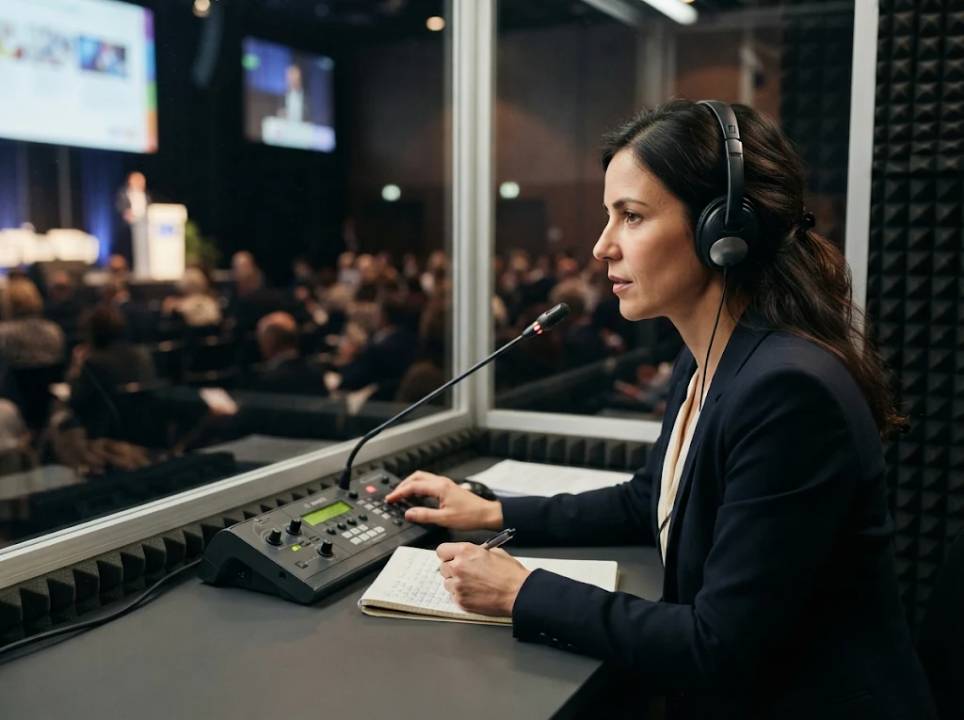
In simultaneous mode, interpreters sit in a booth, listen through headphones and speak into a microphone while the speaker continues. Listeners hear the interpretation through receivers.
This mode saves time and suits large international events, because the program does not slow down.
Consecutive Interpreting
In consecutive mode, the speaker pauses after a few sentences and the interpreter renders the message. It works well for small meetings, interviews and site visits.
The session takes longer, but it needs less equipment and feels more personal.
Whisper Interpreting
Also called chuchotage, this method places the interpreter beside one or two listeners, who receive a quiet live rendering. It suits short situations with very few people.
It becomes tiring over long periods and does not work well in noisy rooms.
Why Interpreters Work in Pairs
Simultaneous interpreting demands intense concentration. Professionals usually switch every twenty to thirty minutes to protect accuracy.
That is why quotes include at least two interpreters per language, even for short sessions.
Equipment You Will Need
Booths, consoles, microphones, headsets and receivers must meet technical standards. Poor sound can ruin even the best interpretation.
Ask your provider for a site visit or a technical check, and test everything before the doors open.
Remote Interpreting Options
Video platforms with built-in interpretation make it possible to hold multilingual meetings without travel. Interpreters need strong internet, quality headsets and a quiet room.
For urgent short conversations, phone interpreter services can connect you with a linguist in minutes.
Preparing Your Speakers
Ask speakers to share slides and scripts in advance, speak at a steady pace and avoid reading at high speed. Jokes and acronyms should be explained.
These small adjustments help interpreters deliver a clear, faithful message.
Sharing Documents Early
Agendas, glossaries, names of participants and technical terms belong in the briefing pack. Interpreters study them days before the event.
If your materials also need written conversion, a service for german to english translation for conferences can prepare handouts and programs in parallel.
Choosing Language Combinations
Think about the languages your audience actually speaks. Offering too many channels raises costs, while too few leaves people out.
Survey registrants early and match interpretation to real needs.
Professional Standards and Ethics
Interpreters follow codes of confidentiality, neutrality and accuracy. They do not add opinions or omit uncomfortable content.
Professional associations such as AIIC, the international association of conference interpreters publish guidance on working conditions and best practice.
Budgeting Realistically
Costs depend on languages, number of days, equipment and travel. Quotes usually cover preparation time as well as the sessions themselves.
Cutting corners on interpreting often creates greater expenses through misunderstandings and complaints.
On the Day
Arrive early, brief the technician, show interpreters where the booth is and give them water and a quiet place to rest. Keep the schedule realistic and respect breaks.
A calm environment produces better results for everyone.
After the Event
Collect feedback from participants and interpreters. Note which sessions worked well and which technical issues appeared.
Share recordings only with permission, since interpreters have rights over their performance.
Choosing a Provider
Ask about experience in your sector, credentials, backup plans and the technology they use. References from similar events are a good sign.
A reliable partner will guide you through planning rather than simply sending an invoice.
Final Advice for Organizers
Treat language access as part of the event design from the first meeting. Plan, test and communicate clearly with your team.
Good interpreting turns a crowded room into a real conversation.
Common Mistakes to Avoid
Organizers often book interpreters too late, forget to share materials or place booths where interpreters cannot see the speaker. Others rely on bilingual staff who are not trained for the task.
Professional interpreting is a distinct skill, and planning ahead prevents nearly every one of these problems.
Medical and Legal Settings
Hospitals, courts and government offices have their own vocabulary and strict ethical rules. Interpreters in these settings need specific training and often certification.
Do not ask relatives or colleagues to improvise when accuracy affects health, freedom or money.
Interpreting for Online Webinars
Webinars attract audiences from many time zones. Provide language channels in the platform, publish instructions in advance and give participants a way to report audio problems quickly.
Recorded sessions with translated captions extend the value of the event for months.