What Indonesia Teaches Us About Floating Solar Power
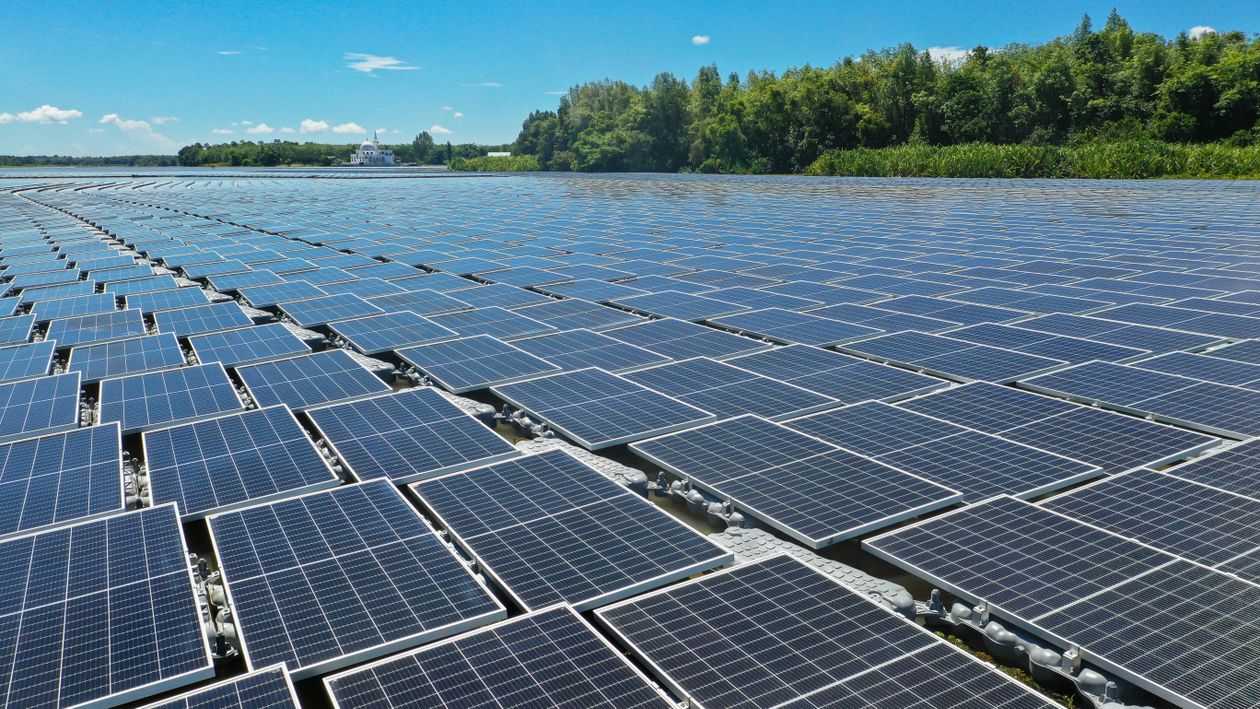
On a calm reservoir in West Java thousands of solar panels float on the water like a silver carpet. When the Cirata plant opened in late 2023 it became the largest floating solar installation in Southeast Asia with a peak capacity of 192 megawatts. The project shows how a crowded country can make clean power without clearing forests or farmland. It also shows how much careful communication a green project needs to succeed.
Why Floating Solar Makes Sense for Crowded Nations
Land is precious in many parts of Asia. Rice fields and villages and protected forests leave little room for large solar farms. Floating systems solve that problem by using the surface of lakes and reservoirs that already exist. The panels stay cooler on the water which can improve their efficiency. They also reduce evaporation which matters in regions where water supplies face pressure during the dry season.
The Cirata plant sits on the reservoir of the Cirata Dam which already hosts a large hydropower station. Sharing the site lets the operators use existing grid connections and roads. That lowers costs and shortens construction time. Developers in other countries now study the project as a model for pairing solar and hydropower.
The idea is spreading. Floating arrays now appear on reservoirs in India and Thailand and parts of Europe. Each new site brings its own mix of technical and social challenges.
Indonesia and Its Clean Energy Goals
Indonesia is the largest economy in Southeast Asia and it still relies heavily on coal for electricity. The government has set targets to raise the share of renewables and international partners have pledged funding to speed up the transition. Solar has huge potential because the country sits on the equator and enjoys strong sunlight all year.
Yet the scale of the task is enormous. The nation spreads across more than seventeen thousand islands. Many remote communities still depend on diesel generators. Small solar systems and local grids can bring clean power to these places faster than long transmission lines.
International investors and engineering firms play a big role in this growth. They bring capital and technology. They also bring contracts and manuals and safety rules written in English or Arabic or Chinese. All of that material must reach local teams in a form they can use every day.
In 2022 Indonesia and a group of wealthy nations announced a Just Energy Transition Partnership worth around twenty billion dollars to help the country move away from coal. The plan covers new renewable capacity and grid upgrades and support for workers in coal regions. Growth of solar power sits at the center of that effort. Rooftop systems on factories and homes are expanding alongside utility scale plants. Each segment needs trained installers and clear rules and a steady flow of information between foreign suppliers and local businesses.
Language as Part of the Energy Transition
The indonesian language serves as the national language and unites a country where hundreds of regional languages are spoken. Bahasa Indonesia is the medium of government and business and schools. For a foreign developer it is the key to working with regulators and contractors and local workers.
Many people in rural areas speak a regional language at home. In West Java that is often Sundanese. Community meetings about land use or fishing rights on a reservoir work best when information is shared in a language people feel comfortable with. Projects that skip this step often face delays and mistrust.
Clear communication also protects workers. Electrical installations on water carry specific risks. Safety briefings and equipment labels must be precise. A single unclear instruction can lead to an accident. Translation in this context is not a formality. It is part of the safety system.
What Project Teams Need From Translators
International firms entering this market rely on professional indonesian translation services for a wide range of documents. Environmental impact studies and permits and power purchase agreements all need accurate versions in Bahasa Indonesia. Technical manuals for inverters and floating structures must keep their terminology consistent across thousands of pages.
PoliLingua supports energy and engineering clients under ISO 17100 which requires a second linguist to review every project. The agency has operated since 2002 and provides a free quote within fifteen minutes. For a developer racing to meet a financing deadline that speed keeps the schedule on track.
Good translation partners also build glossaries at the start of a project. They agree on terms for components and procedures and then use them everywhere. That consistency helps local engineers learn faster and reduces costly errors during installation and maintenance. It also makes later audits and insurance reviews much simpler.
Environmental Questions Worth Asking
Floating solar is not free of impacts. Covering part of a reservoir changes how much light reaches the water. Scientists study effects on fish and algae and water temperature. Most studies so far suggest that moderate coverage causes limited harm yet each site needs its own monitoring.
Local fishing communities often depend on the same reservoirs. Their concerns about access and income deserve real answers. Projects that share monitoring data openly and explain results in local languages tend to earn stronger support. Transparency turns a technical project into a shared community asset.
Recycling is another issue for the future. Solar panels last around twenty five years and the first large wave of retired modules will arrive in the next decade. Planning for collection and recycling now avoids a new waste problem later.
Training is the final piece. Local technicians need courses and certifications in their own language to maintain floating systems for decades. Well translated training material creates skilled jobs that stay in the region long after the foreign contractors leave.
Lessons for the Rest of the World
Indonesia's floating solar experience offers practical lessons for any country with limited land and strong sunshine. Use existing water bodies wisely. Combine new solar with existing hydropower infrastructure. Invest in clear communication with workers and communities from the very first day. Clean energy grows fastest when technology and trust move forward together.