Rainwater Collection System Basics: How to Harvest Rain at Home
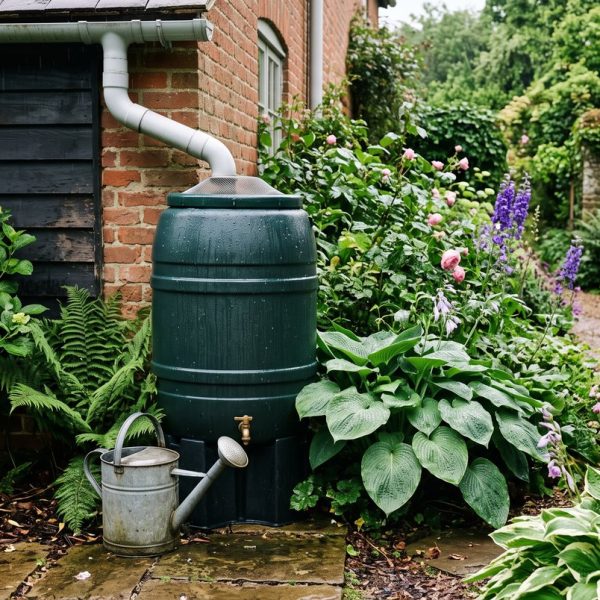
Every time it rains, thousands of liters of clean, soft water pour off the average roof and disappear down the drain. A rainwater collection system captures that water before it vanishes, storing it for the garden, the compost pile, even the washing machine in more ambitious setups. It is one of the oldest sustainability practices on record, and one of the easiest to start this weekend.
Why harvesting rain still makes sense
Municipal water is treated, pumped and priced, and demand keeps climbing while droughts grow longer in many regions. Rainwater harvesting has been practiced for thousands of years, from cisterns beneath Roman villas to stepwells in India, precisely because it solves a local problem with local resources. A modern household version does the same. Plants prefer rainwater because it is free of chlorine and salts. Your water bill drops. And in a heavy storm, every barrel you fill is water that does not rush into overloaded storm drains carrying pollutants to the nearest river.
There is a climate angle too. Treating and pumping drinking water takes energy, so every liter you substitute with rain trims a small amount of carbon from your footprint. Multiply that across a neighborhood of gardens and the numbers get meaningful.
How a home rainwater collection system works
The basic anatomy is simple: a catchment surface (your roof), a transport route (gutters and downspouts), a filter to keep out leaves, and a storage vessel. The classic entry point is a rain barrel, a 200 liter container that sits under a downspout with a spigot at the bottom and an overflow near the top. A diverter kit splices into the downspout and sends water to the barrel until it is full, then lets the rest continue down the drain.
From there, systems scale with your ambitions. Link two or three barrels with short hoses and you triple your storage for very little money. Serious gardeners install slimline tanks of 1000 liters or more, and off grid households add pumps, first flush diverters that discard the initial dirty runoff, and fine filtration. The principle never changes: catch, filter, store, use.
How to collect rainwater without common mistakes
A few details separate a tidy system from a mosquito farm. Screen every opening with fine mesh, because standing water attracts insects within days. Give the barrel a solid, level base; a full 200 liter barrel weighs around 200 kilograms and will tip on soft ground. Plan the overflow route before the first storm so excess water runs away from your foundation, not toward it. And use collected water for irrigation rather than drinking unless you have installed proper purification, since roofs shed dust, pollen and the occasional gift from passing birds. When universities adapt, refugee students bring resilience and fresh perspectives to campus.
Dark colored barrels earn their keep by blocking sunlight, which keeps algae from growing. In cold climates, drain the system before winter so ice does not split the tank. None of this is difficult. It is the kind of practical detail neighbors trade over the fence, and online communities such as the r/homestead community on Reddit are full of hard won advice from people running systems in every climate imaginable.
Rainwater systems are a good example of documentation that has to serve very different climates, regulations and plumbing conventions at once. Writing installation guidance that works across all of them is a structural challenge before it is a linguistic one. This piece on technical documentation translation is a useful account of how that is managed.
Is it legal to collect rainwater?
A question that surprises many beginners: is it illegal to collect rainwater where you live? In most of the world the answer is a clear no, it is legal and often actively encouraged with subsidies for barrels and tanks. A handful of places regulate collection volumes because of older water rights laws, and some regions require simple registration for large cisterns. The sensible move is to check your local rules before investing in a big tank. For a standard garden barrel, you will almost never encounter a restriction, and many cities will even sell you a subsidized one.
Rules differ across borders, which matters if you manage property abroad or follow international guidance. Technical standards and municipal codes rarely come in your native language, which is where professional document translation services earn their place in an eco project, turning foreign regulations and installation manuals into something you can actually act on.
Start small, then let the rain argue for you
The best advice for beginners is to resist overplanning. Buy or build one barrel, fit one diverter, and watch what happens in the next real storm. Most people are startled by how quickly it fills; a modest roof sheds over 500 liters in a single decent downpour. That moment usually converts more skeptics than any spreadsheet.
From there you can grow the system as your garden demands: a second barrel, a soaker hose run by gravity, perhaps a proper tank when the numbers justify it. A rainwater collection system is sustainability at its most tangible. The sky delivers, the barrel catches, the tomatoes drink, and the meter in the basement stays still a little longer.